


A Nobel Laureate's Choice: Piezo1 Tattooed on the Arm
In 2024, Nobel laureate Ardem Patapoutian merged science and art by tattooing the three-dimensional structure of Piezo1 on his arm. When he bends his arm, the stretching of the skin alters the tattoo's shape, perfectly mimicking the conformational change of Piezo1 when activated by mechanical force in the cell membrane. This unique "human experiment" both pays tribute to a great discovery and makes an intricate molecular mechanism intuitively understandable.
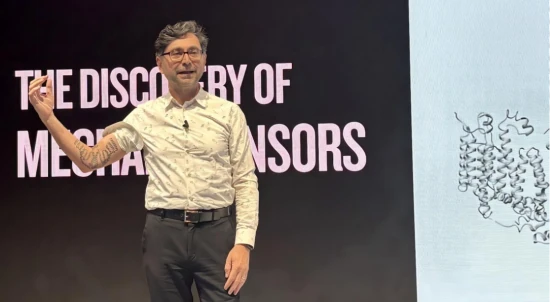
The Discovery of Piezo1: Unraveling the Mystery of Cellular "Touch"
For a long time, scientists were curious about how cells sense and respond to physical forces such as pressure, touch, and blood flow. In 2010, Patapoutian's team successfully identified Piezo1 through an innovative functional screening strategy combining micromanipulation, electrophysiological recording, and RNA interference. This discovery revolutionized our understanding of the core molecular mechanism by which cells convert mechanical stimuli into biological signals, earning Piezo1 the title of the cell's "mechanosensor."
The Molecular Mechanism of Piezo1: An Elegant Design from Structure to Function
Piezo1 is a homotrimeric membrane protein composed of three identical subunits. When the cell membrane is subjected to pressure, stretch, or shear stress, the conformation of Piezo1 changes, forming a channel that allows calcium ions (Ca²⁺) to flow in. The influx of calcium ions converts the mechanical force signal into intracellular electrical signals and biochemical responses, a process known as mechanotransduction. This mechanism enables cells to sense the rush of blood flow, perceive tissue tension, and play a key role in various physiological activities.
The Medical Significance of Piezo1: Broad Impact from Rare to Common Diseases
Due to its central role in mechanotransduction, the dysfunction of Piezo1 is closely related to a variety of human diseases. In osteoarthritis, chondrocytes over-activate Piezo1 under abnormal pressure, leading to inflammation and cartilage degeneration. In atherosclerosis, turbulent blood flow activates Piezo1 in vascular endothelial cells, promoting the formation of arterial plaques. Studies have also found that Piezo1 plays an important role in diseases such as multiple sclerosis and sickle cell disease, making it a highly attractive drug development target.
Therapeutic Regulation and Future Prospects: New Strategies Targeting Piezo1
The discovery of Piezo1 has provided a specific molecular entity for research in mechanotransduction, prompting scientists to understand physiological and pathological processes from a perspective that integrates mechanical and chemical signals. Agonists, antagonists, and modulators targeting Piezo1 are being actively developed for the treatment of related diseases. For example, moderate activation of Piezo1 can significantly promote the release of cellular exosomes, opening up new possibilities for regenerative medicine and drug delivery. As research continues, a new era of biomedicine driven by basic research is quietly emerging.
Cyagen's Relevant Mouse Models
Cyagen provides the following mouse models related to Piezo1:
| Product Name | Product ID | Strain Full Name | Type |
|---|---|---|---|
| Piezo1-KO Mice | S-KO-06753 | C57BL/6JCya-Piezo1em1/Cya | Knockout Mice |
| Piezo1-flox Mice | S-CKO-07776 | C57BL/6JCya-Piezo1em1flox/Cya | Piezo1 Conditional Knockout |
| Piezo1-flox Mice | S-CKO-07775 | C57BL/6NCya-Piezo1em1flox/Cya | Piezo1 Conditional Knockout |
Content Source and Disclaimer
Content Source
Disclaimer
The content on this page is for reference only for professionals in the biomedical field. It does not constitute any medical advice or diagnostic basis. Any third-party intellectual property (including but not limited to trademarks, patents, copyrights, etc.) cited on this page belongs to its rights holders. If you believe that the content on this page infringes your legal rights, please contact us immediately, and we will deal with it as soon as possible.


