AI-Empowered Genetic Disease Research: Industry Pain Points and RDDC Solutions
An industry view on data scarcity, barriers, and heterogeneity, and how RDDC delivers a one-stop solution via integration, standardization, and AI bioinformatics, with video and authoritative references.
Industry Pain Points
- Data scarcity: Institutional datasets are siloed and hard to integrate.
- Access barriers: Some international databases restrict cross-border access, hindering collaboration.
- Data heterogeneity: Non-unified formats, naming differences, and annotation issues require heavy cleaning.
RDDC: Turning Insights into Actionable Solutions
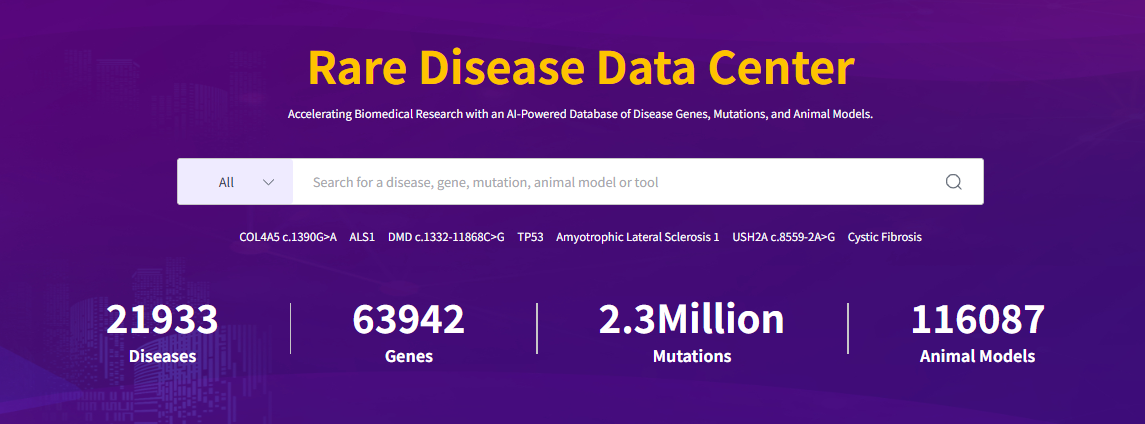
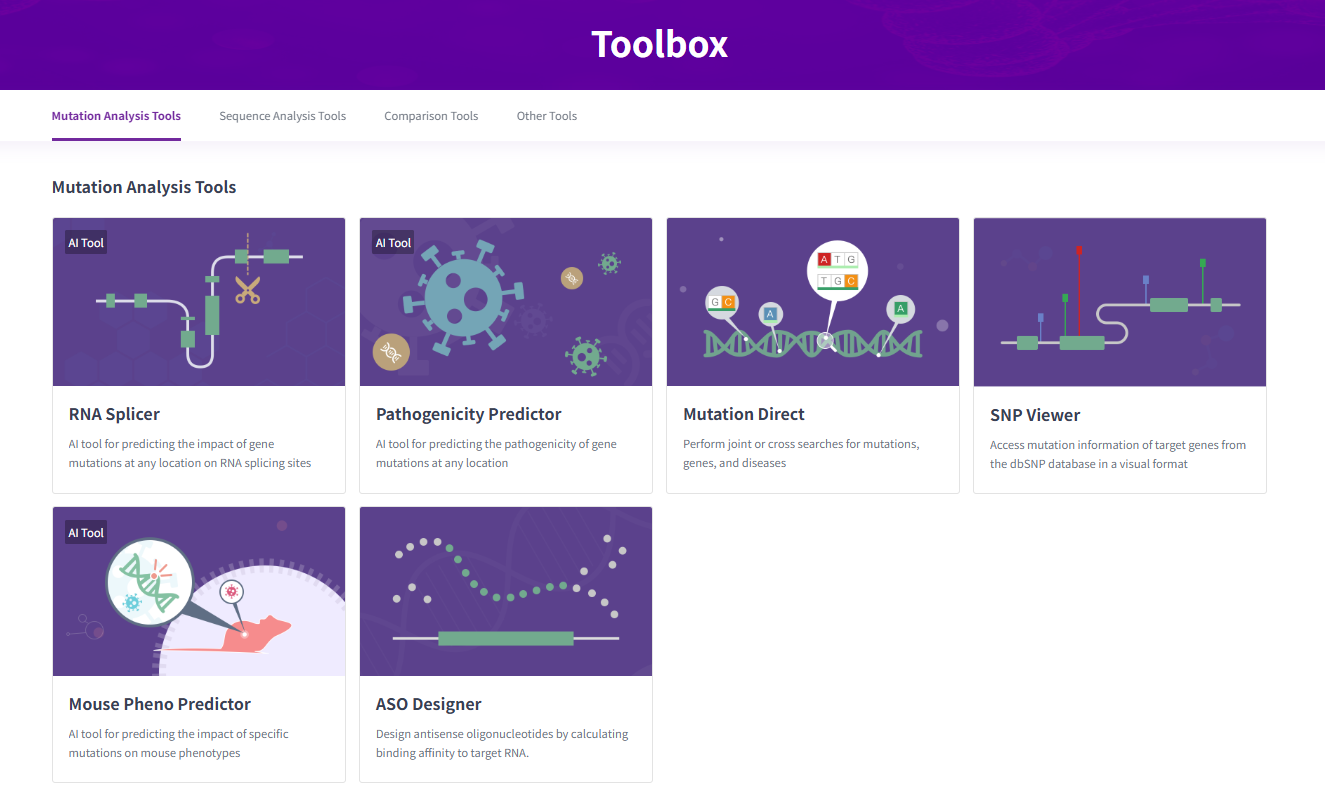
The Rare Disease Data Center (RDDC) is China’s first publicly accessible and permanently free research database for rare diseases. It integrates open-source and high-quality domestic datasets, standardizes and semantically restructures information, and offers one-stop access to genes, mutations, diseases, and animal models, together with an AI bioinformatics toolkit (e.g., Pathogenicity Predictor, RNA Splicer, Variant Viewer) to enable the full workflow from query to visualization to model selection.
Built jointly by the RDGTA Alliance, the Tsinghua Pearl River Delta Research Institute, and Cyagen.
Integration and Standardization
- Unified data formats and naming conventions lower the barrier to cross-entity search and analysis.
- Cross-linked queries across diseases/genes/mutations/models improve discoverability and usability.
Visualization and Toolchain
- Intuitive sequence and variant views for rapid mutation pinpointing.
- Rich comparison tools to perform point-to-point comparisons across diseases and models.
AI Models and Citations
Multiple AI tools have been used or benchmarked in literature; results align closely with reported findings (see citation cases). International coverage includes Nature’s article New Chinese databases are a boost for rare-disease science featuring RDDC.
Video Introduction
Six Key Advantages
- AI-driven: Tools built on large-scale disease, gene, mutation, and model data.
- Mutation-centric: Uncover mutation–phenotype mechanisms to pinpoint targets.
- Core datasets: Coverage of 20k+ diseases, 60k+ genes, and millions of variants.
- Visualization-first: Multi-dimensional visualization and comparison tools for efficiency.
- LLM assistance: Conversational retrieval with integrated APIs and tools.
- One-stop workflow: From macro trends to micro details in a single platform.
Featured Functions: AI + Bioinformatics
RDDC consolidates epidemiology, drug discovery, disease–gene maps, variant sites, and mouse models; nearly 30 tools support rapid progression from target discovery to model selection.
One-Stop Query Examples